
The First 72 Hours of a Large-Scale Property Loss: What Insurance Adjusters in Rhode Island Should Expect from a Restoration Partner
When a large-scale property loss occurs in Rhode Island or Southeastern New England, the first 72 hours determine how efficiently the insurance claim will progress.
Whether the loss involves a commercial building, multi-unit housing complex, healthcare facility, school, municipal property, or institutional structure, early decisions directly affect scope accuracy, cost control, and claim cycle time.
For insurance adjusters, restoration is not simply drying and debris removal. It is documentation, coordination, and claim stability.
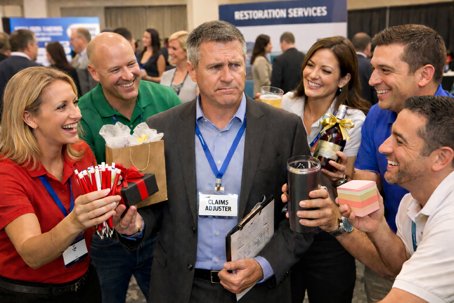
In today’s claims environment, insurance adjusters are regularly approached by restoration vendors at industry conferences, trade shows, and networking events throughout Rhode Island and New England. Promotional materials and branded giveaways are common. However, large-scale property losses are not managed through marketing tactics. They are managed through disciplined process, documentation integrity, and operational capability. When the loss occurs, performance matters more than presentation.
Below is what adjusters should expect from a qualified large-loss restoration partner.
Emergency response must be structured and documented. Within the first day, a professional restoration partner should provide:
• Rapid mobilization
• Initial moisture mapping and thermal imaging where appropriate
• Photo documentation organized by affected areas
• A preliminary stabilization plan
• Identification of immediate safety risks
• Defined communication contact and reporting cadence
In large property losses across Rhode Island and Southeastern New England, carriers expect actionable reporting within hours, not days. Adjusters should not be chasing updates.
How Should Restoration Contractors Handle Cost Control on Large Claims?
Large-scale losses expand quickly if not managed with discipline. A qualified restoration partner should:
• Separate mitigation and reconstruction scopes
• Provide itemized estimates using recognized estimating platforms
• Identify potential business interruption exposure early
• Clarify areas of uncertainty before work escalates
• Minimize unnecessary supplements through early scope alignment
Clear scope definition at the beginning reduces friction between adjuster, insured, and contractor. It shortens review time and protects indemnity spend.
What Certifications and Qualifications Matter in Large-Loss Restoration?
Equipment alone does not qualify a vendor to manage complex claims. Insurance adjusters in Rhode Island and Southeastern New England should expect:
• IICRC-certified technicians
• OSHA-compliant jobsite practices
• Dedicated project management oversight
• Demonstrated experience with multi-structure or institutional losses
• Structured file organization and documentation protocols
Large-loss capability is about process, not just manpower.
Why Large Commercial and Institutional Losses Require Specialized Execution
Large properties introduce operational complexity that residential mitigation does not.
Examples include:
• Tenant occupancy during mitigation
• Public-facing facilities under regulatory oversight
• Schools, hospitals, or municipal buildings requiring phased containment
• Revenue exposure and business continuity planning
• Reconstruction sequencing that aligns with operational needs
Restoration must support operational stability while executing technical drying and reconstruction.
What Documentation Should Adjusters Expect on a Large-Scale Water or Fire Loss?
Documentation protects the adjuster, the carrier, and the insured.
A disciplined restoration partner should provide:
• Daily drying logs
• Equipment placement and tracking reports
• Verified moisture readings
• Photo progression reports
• Clear change documentation when scope shifts
Comprehensive documentation accelerates file review and supports defensible claim decisions.
How Pre-Loss Planning Improves Large Property Claim Outcomes
Strong restoration partnerships extend beyond emergency response.
In Rhode Island and Southeastern New England, proactive planning may include:
• Freeze prevention strategies
• Facility risk assessments
• Emergency response protocol development
• Post-loss vulnerability reviews
Pre-loss coordination reduces repeat exposure and improves long-term claim performance across multi-property portfolios.
Restoration as a Claims Partner
At the large-loss level, restoration is part of the claims ecosystem.
Insurance professionals require partners who are responsive, documentation disciplined, large-loss capable, cost-aware, and operationally coordinated.
The objective is not simply restoring property. It is moving the claim forward with clarity, control, and accountability. Contact us to discuss your company's need for accurate, honest, and guaranteed restoration services--no swag attached.