
Why a Cold, Properly Ventilated Attic Protects Your Home from Moisture Damage
As temperatures fall across Rhode Island, homeowners turn up their thermostats, close their windows, and settle in for another New England heating season.
Keeping the house warm is the priority. But what about the attic?
Most homeowners seldom think about their attic unless they're retrieving holiday decorations, investigating a roof leak, or preparing for a home inspection in order to sell their property.
Yet what happens in that space above the ceiling can have a significant impact on the condition of the home below.
Here's what every homeowner should understand: In a traditional, unconditioned attic, cold temperatures during winter are normal and desirable.
The problem begins when warm, moisture-laden air from inside the house finds its way into that cold space.
And the consequences can remain hidden for months.
How Can a Warm House Create Moisture in a Cold Attic?
Everyday household activities such as showering, cooking, washing dishes, and doing laundry release moisture into the air.
That warm, humid air can escape into the attic through openings around recessed lighting, plumbing pipes, electrical wiring, attic access doors, and other gaps in the ceiling.
When it encounters cold surfaces, such as roof sheathing or exposed roofing nails, water vapor condenses into droplets. During particularly cold Rhode Island weather, it can even form frost.
As temperatures rise, accumulated frost melts, allowing water to drip onto insulation, framing, and ceilings below.
Repeated moisture exposure can lead to mold growth, damaged insulation, deteriorating wood, and costly repairs. An important thing to remember: Your roof doesn't have to leak for your attic to become wet.
Two Attics, Two Very Different Outcomes
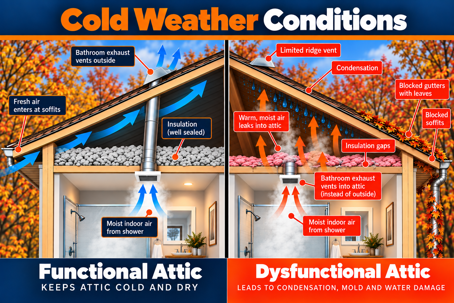
Our illustration, Cold Weather Conditions, shows how two seemingly similar homes can experience very different conditions during the heating season.
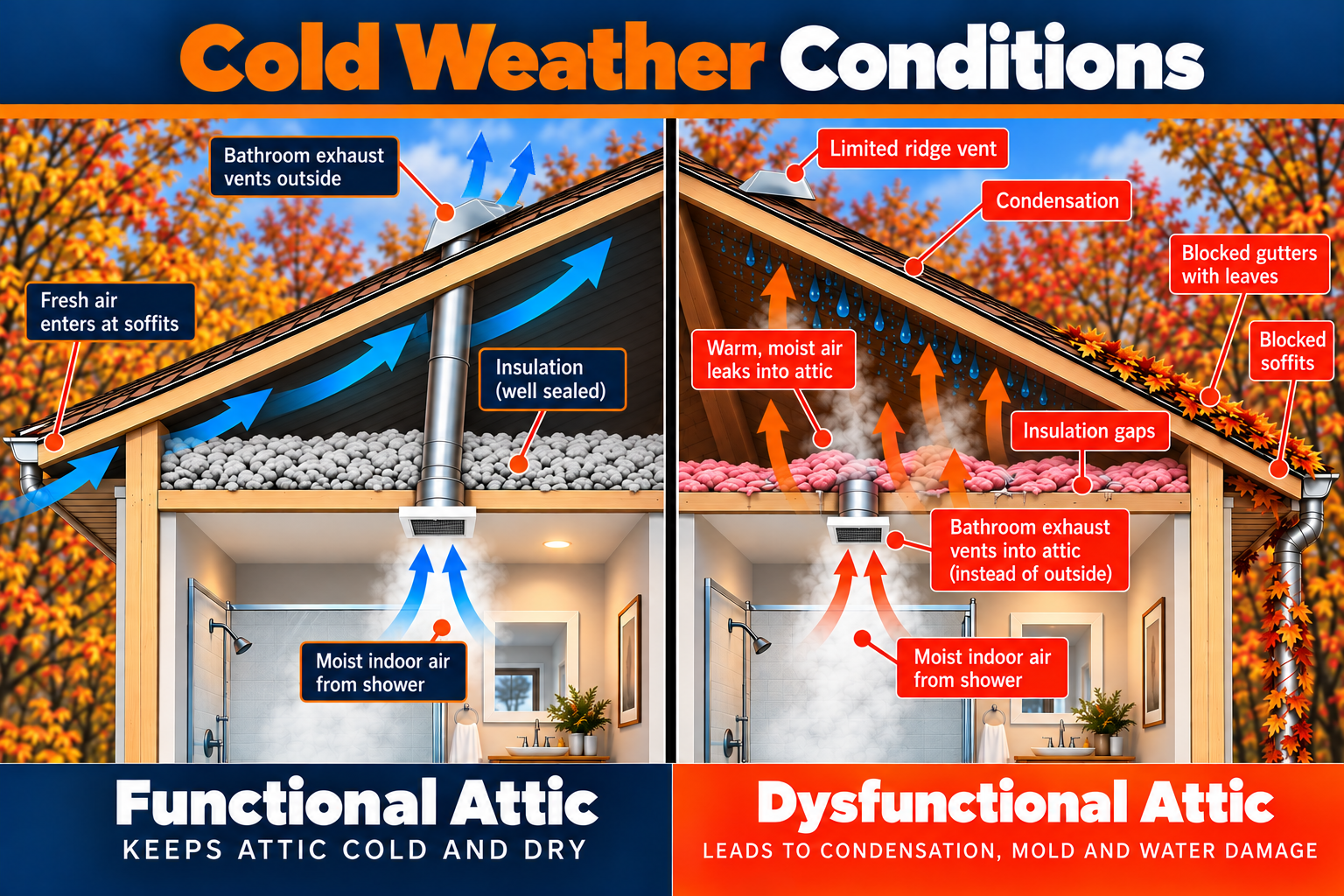
Proper insulation, air sealing, and ventilation help control attic moisture. Air leaks, improperly vented bathroom exhaust, and blocked ventilation pathways can contribute to condensation and mold growth.
The Functional Attic
On the left, the functional attic has insulation along the attic floor, limited air leakage from the living space, and unobstructed ventilation that allows outside air to circulate through the attic.
Notice the bathroom exhaust duct. Moist air from the shower travels through a dedicated duct and is discharged outdoors through a roof vent.
The Dysfunctional Attic
On the right, the dysfunctional attic tells a different story.
Warm, humid air enters through openings in the ceiling, while the bathroom exhaust fan releases additional moisture directly into the attic. Gaps in insulation contribute to heat loss, and blocked ventilation pathways interfere with airflow.
When that moisture encounters cold roofing materials, condensation forms. If the problem continues, mold growth and deterioration of building materials can follow.
The illustration also shows clogged gutters, a separate drainage problem that can contribute to water intrusion around roof edges.
The important distinction is that a properly functioning attic controls the movement of heat, air, and moisture rather than allowing them to accumulate where they can cause damage.
Why Keeping Your Attic Cold Protects Your Home
It may seem counterproductive to heat your home while allowing cold outdoor air to circulate through the attic.
But in a traditional, unconditioned attic, that's how the system is designed to function.
Insulation along the attic floor helps retain heat in the living areas below. Air sealing limits the movement of warm, humid indoor air into the attic. Properly designed ventilation allows outdoor air to enter through soffit vents and exit through ridge or other upper vents.
The U.S. Environmental Protection Agency's ENERGY STAR program emphasizes the importance of attic air sealing and insulation in reducing energy loss and improving home comfort. Its guidance also recommends keeping soffit ventilation openings clear and correcting bathroom exhaust systems that discharge into attics.
Together, these measures help:
- Keep heated indoor air from escaping into the attic.
- Reduce the potential for condensation on cold roofing materials.
- Limit moisture conditions that support mold growth.
- Reduce heat loss and the risk of winter ice dams.
These principles are especially important during Rhode Island's heating season, when the temperature difference between warm living areas and cold attic surfaces can be substantial.
Not every attic is designed this way. Conditioned and unvented attic assemblies require different moisture-control strategies.
But for homes with traditional, unconditioned attics, the objective is straightforward:
Keep the warmth inside the living space and the unwanted moisture out of the attic.
Five Warning Signs of Attic Moisture Damage
Attic condensation doesn't always announce itself with a water stain on the ceiling. Moisture can accumulate for weeks or months before homeowners notice a problem.
Watch for these warning signs:
- Frost or water droplets on roofing nails. Moist indoor air may be condensing on cold metal surfaces.
- Dark staining on roof sheathing or rafters. Discoloration may indicate repeated moisture exposure, although it doesn't necessarily mean mold is present.
- Damp or compressed insulation. Wet insulation can lose effectiveness and may indicate condensation or a roof leak.
- Persistent musty odors. Unusual odors may indicate damp materials or hidden mold growth.
- Visible mold-like growth. Recurring moisture can support mold growth on attic wood and other susceptible materials.
These conditions warrant investigation. Attic condensation and roof leaks can produce similar symptoms, making it important to identify the actual moisture source before repairs begin.
Four Ways to Help Prevent Attic Condensation
Rhode Island homeowners can reduce the risk of attic moisture problems by addressing four important conditions:
- Control indoor humidity. The EPA recommends keeping indoor relative humidity below 60%, ideally between 30% and 50%. Lower levels may be needed during very cold weather.
- Vent bathroom exhaust outdoors. Bathroom fans should discharge moist air through properly installed exterior vents, never directly into the attic.
- Maintain insulation and air sealing. Gaps in the ceiling allow warm, humid air to escape. ENERGY STAR recommends sealing attic air leaks before adding insulation.
- Keep attic ventilation pathways clear. Soffit vents and appropriate upper-roof vents must remain unobstructed for a traditional vented attic to function as designed.
These measures address the movement of moisture before it causes damage. Homeowners who suspect existing condensation, wet insulation, or mold should have the underlying conditions evaluated before making improvements.
Frequently Asked Questions About Attic Condensation in Rhode Island
Q: Should my attic be cold during a Rhode Island winter?
Yes. A traditional, unconditioned attic should generally remain close to outdoor temperatures. Proper insulation and air sealing separate the heated living space from the attic, while appropriate ventilation helps manage attic conditions.
Q: Can a bathroom exhaust fan cause mold in the attic?
Yes. If a bathroom exhaust fan releases humid air into the attic instead of outdoors, moisture can condense on cold roofing materials. Repeated dampness can create conditions that support mold growth.
Q: Does attic condensation mean my roof is leaking?
No. Attic condensation can occur even when the roof is watertight. Warm, humid indoor air entering a cold attic can produce moisture on roof sheathing, nails, and framing. A professional evaluation may be needed to distinguish condensation from a roof leak.
Q: Who should I call for attic mold or water damage in Rhode Island?
The appropriate professional depends on the cause. An insulation, ventilation, or roofing specialist may be needed to correct the underlying problem. When moisture has already caused mold contamination or water damage, Single Source Disaster Recovery provides mold remediation, water damage cleanup, and property repair services for Rhode Island property owners.
The Damage You Don't See Can Become the Damage You Can't Ignore
As another Rhode Island heating season begins, remember that not every moisture problem starts with a storm, burst pipe, or leaking roof.
Sometimes it begins with something as ordinary as taking a hot shower.
Warm, humid air travels unnoticed into the attic, condenses against cold surfaces, and creates problems that may remain hidden until significant damage has occurred.
Understanding how your attic is supposed to function, recognizing the warning signs of excessive moisture, and addressing problems early can help prevent expensive repairs.
Since 1971, Single Source Disaster Recovery has helped Rhode Island property owners address mold, water damage, and property repair needs.
Because protecting your property isn't always about what you can see. Sometimes it's about understanding what's happening where you rarely look.
Additional Homeowner Resources