
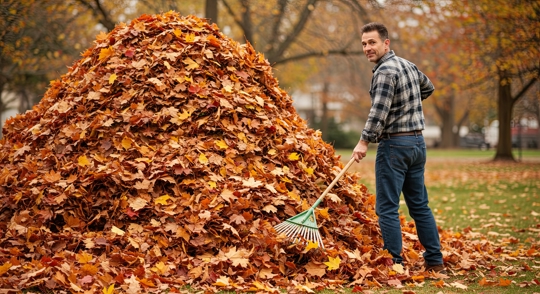
Over the next few weeks, as millions of leaves fall from trees across Rhode Island, property owners will start the mad scramble to get rid of one of nature’s most colorful displays of seasonal change.
Out come the rakes and paper lawn bags. Leaf blowers roar to life. Landscaping crews arrive to gather and haul away what nature has spent the entire growing season producing.
But before you clear away every leaf that lands on your property, it’s worth knowing that fallen leaves can be both helpful and harmful. It all depends on where they accumulate and where they’re allowed to stay.
The goal shouldn’t necessarily be to get rid of your leaves. It should be to manage them.
Where Leaves Can Damage Your Property
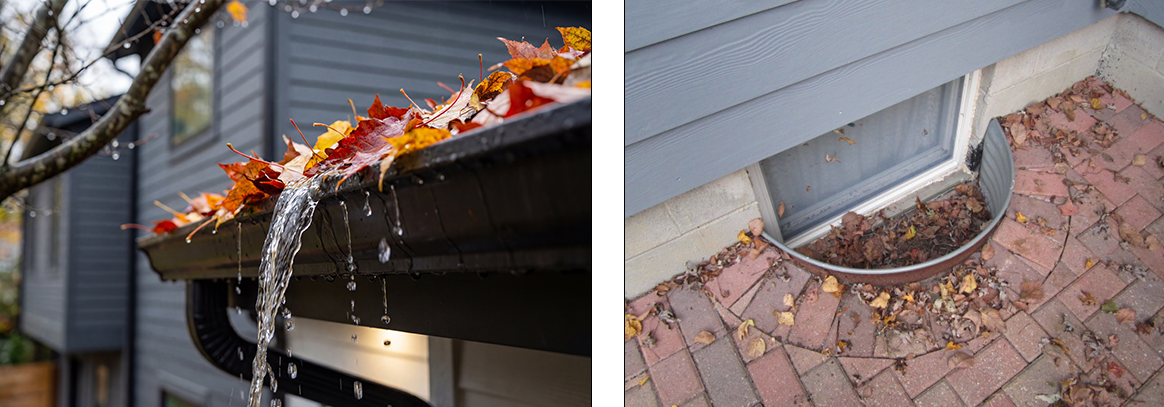
There are some places where leaves simply don’t belong.
Gutters and downspouts are at the top of the list. When leaves prevent rainwater from flowing freely, gutters can overflow and water can run down exterior walls or collect near the foundation instead of being directed safely away from the building.
Leaves can also block outdoor drains, fill window wells and accumulate in low areas where water needs a clear path to flow. Wet leaves piled against siding and foundations can hold moisture against the structure.
Add a heavy Rhode Island rainstorm or nor’easter, and a harmless-looking pile of leaves can suddenly become part of a much bigger water problem.
So clean the gutters. Clear the downspouts and drains. Remove leaves from window wells, walkways and other areas where they can create problems. Keep wet piles away from buildings.
But don’t assume those leaves need to go into a bag.
Where Leaves Can Do Some Good
What can contribute to a moisture problem against a building can become valuable habitat just several yards away.
Fallen leaves aren’t litter. They create a small but surprisingly important ecosystem right beneath our feet.
That layer of leaves provides insulation, food and shelter for some of our planet’s tiniest inhabitants. Moths and butterflies may spend part of the winter among fallen leaves as eggs, caterpillars, pupae or cocoons. Beetles, spiders and other tiny organisms live within the leaf layer, while toads, salamanders and small mammals use leaf litter and the protected ground beneath it for shelter.
Birds benefit, too, searching through fallen leaves for insects and other food.
As the leaves gradually decompose, fungi, microbes and other organisms help turn them into organic matter, returning nutrients to the soil.
What looks like a layer of dead leaves is actually very much alive.
Rethink the Perfect Lawn
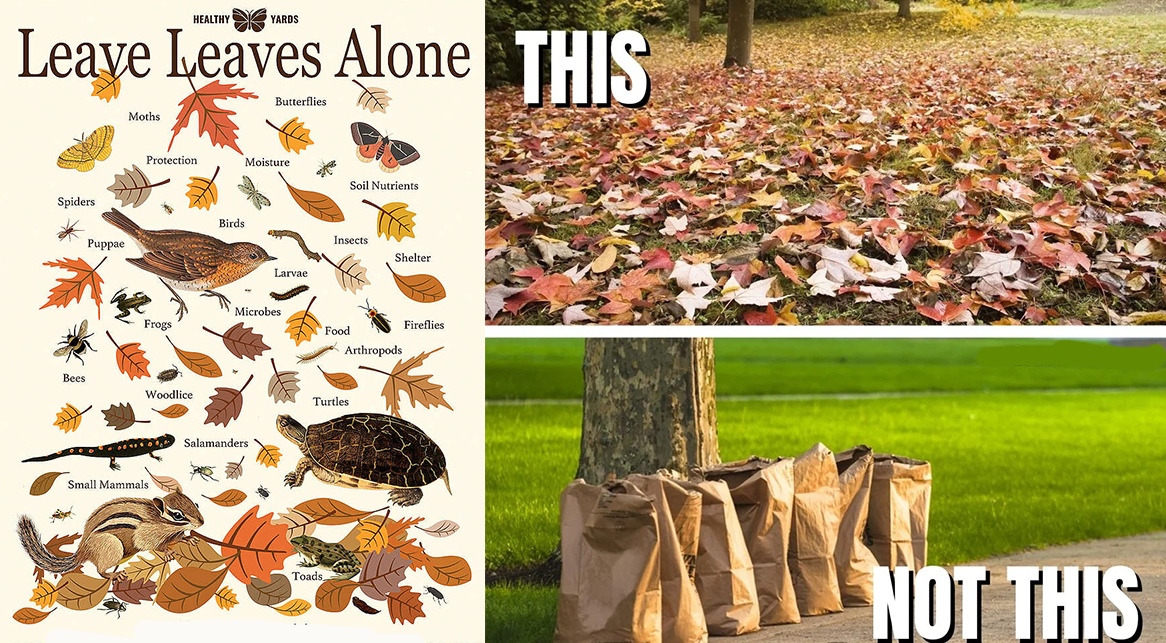
We’ve become accustomed to thinking that a well-maintained property should have a perfectly green lawn, neatly trimmed landscaping and barely a fallen leaf in sight. We water it, fertilize it, treat it and then remove much of what nature gives it for free.
But what if we stopped looking at our lawns as perfectly manicured spaces and started seeing them as living habitats?
Melissa Hopkins of the National Audubon Society described a yard as a “living, breathing habitat,” where allowing some leaf cover can help attract birds, insects and butterflies. As those leaves break down, they also return organic matter to the soil.
That doesn’t mean burying your lawn beneath a thick layer of wet leaves. Too many can become matted and interfere with the health of the grass underneath.
A light covering can be left in place or mulched with a mower. Intact leaves can be moved beneath trees and shrubs, spread over garden beds or placed in less manicured areas of the property where they can provide shelter through the winter.
For property managers, that doesn’t mean allowing leaves to cover entrances, sidewalks or carefully maintained common areas. Landscaped beds, areas beneath trees and shrubs, and designated natural areas can give those leaves somewhere useful to go while keeping the property neat and safe.
Wildlife Needs a Winter Home, Too
As temperatures drop, wildlife begins looking for protection from the elements.
That includes some creatures we enjoy seeing, such as butterflies and birds, and others we would prefer not to find inside our buildings.
Mice and other small mammals need warmth and shelter, too. Maintaining some natural habitat outdoors gives wildlife places to take cover, while sealing gaps and openings around buildings helps keep that wildlife where it belongs: outside.
Fall property maintenance isn’t just about what you remove. It’s also about deciding what stays and where.
Move Them. Don’t Lose Them.
Good fall property maintenance doesn’t require stripping every fallen leaf from your property.
Keep leaves out of gutters, downspouts, drains and window wells. Keep walkways safe and don’t allow wet leaves to accumulate against buildings or interfere with drainage.
Then let nature do something useful with the rest.
Move leaves beneath trees and shrubs. Spread them through garden beds. Mulch some into the lawn. Leave some intact in natural areas where insects and other wildlife can find shelter.
What can contribute to a moisture problem against a building can become valuable habitat just a few yards away. So before you fill another lawn bag or haul another pile away, consider where those leaves might do more good.
This fall, don’t remove nature’s blanket. Manage it.