
Thinking About Replacing Flooring in an Older Rhode Island Home?
Before the furniture is moved and your flooring contractor starts tearing up the old floor, find out what may be underneath it.
Rhode Island has some of the oldest housing stock in the country. The median Rhode Island home was built around 1960, and many were built well before that. And that matters if you're planning a renovation.
Asbestos-containing building materials were widely used in American homes during much of the 20th century, particularly before the 1980s. Although asbestos use declined as its health risks became better understood and federal restrictions were introduced, asbestos was never completely banned from all products in the United States.
Many older Rhode Island homes have also gone through several generations of flooring, particularly in kitchens, bathrooms and finished basements. Hidden beneath the floor you see today may be older tile, sheet flooring, underlayment or adhesive containing asbestos.
We’ve received panicked calls from homeowners after a flooring contractor started a job, uncovered suspicious old tile or adhesive and stopped work. The furniture was already moved. The floor was partly removed. Now the homeowner had to figure out what was underneath before the project could continue.
That situation can often be avoided. If you're replacing flooring in an older Rhode Island home, find out what you're dealing with before demolition begins.
How Can I Tell if My Flooring Contains Asbestos?
You can't know for certain by looking at it. Age, size and appearance can provide clues, but only laboratory testing can confirm whether a material contains asbestos.
Older 9" × 9" tiles are commonly associated with asbestos, but some 12" × 12" tiles, sheet flooring and other flooring materials may contain it too. Old black flooring adhesive, often called black mastic, may also contain asbestos.
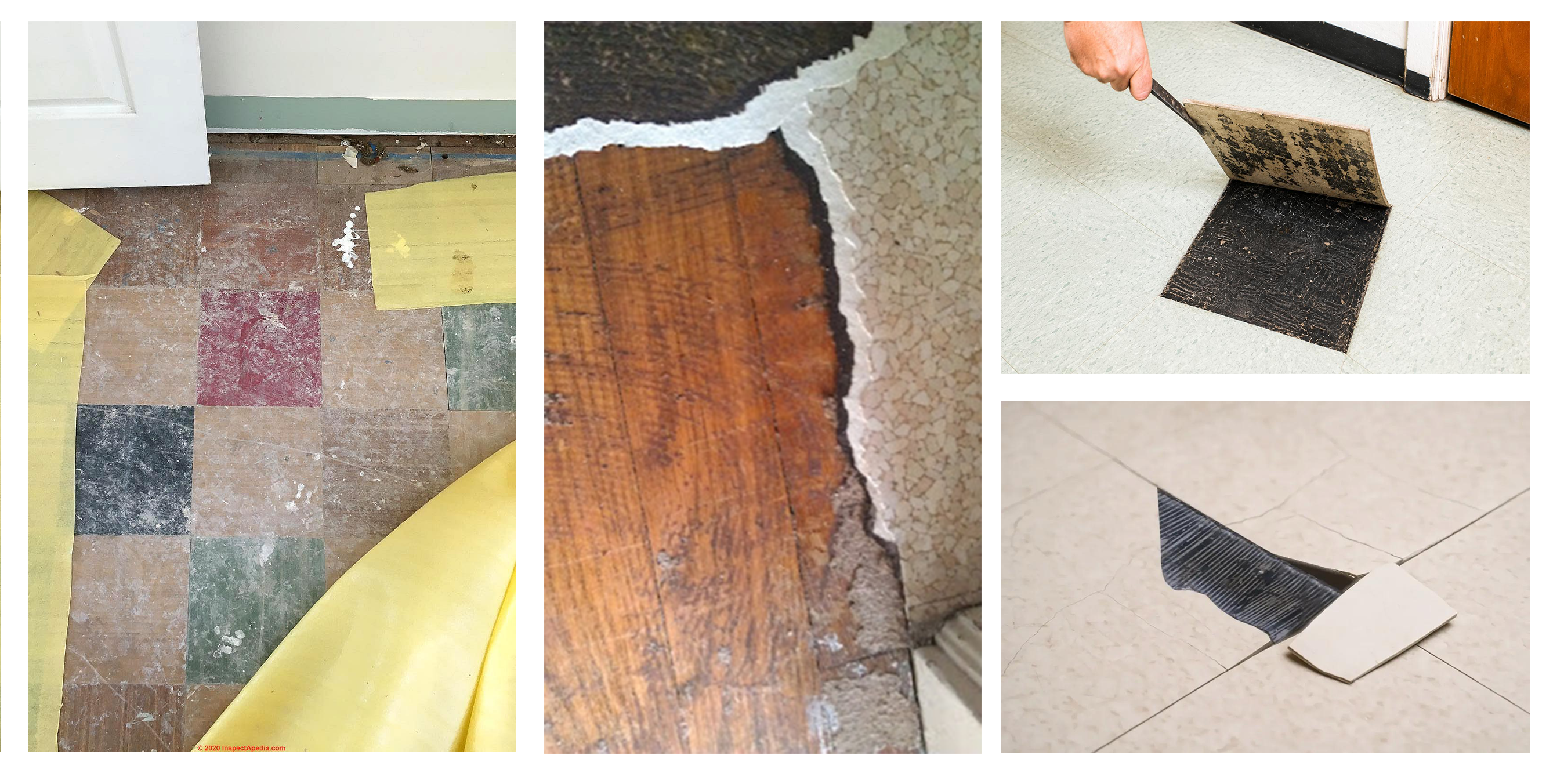
Examples of older flooring and adhesive that may warrant testing. From left to right: 9" × 9" tile, 12" × 12" tile and black mastic adhesive. Appearance alone cannot confirm the presence of asbestos.
What If I'm Replacing an Old Wood Floor?
The wood itself is not typically the concern. What may be underneath it is.
Older homes can have several generations of flooring. Beneath an existing wood floor could be older tile, sheet flooring, underlayment or adhesive.
If your project requires removing the existing floor and disturbing the materials beneath it, find out what is there before demolition begins.
How Do I Test Flooring for Asbestos?
Suspect material should be sampled by a properly trained asbestos professional and analyzed by a qualified laboratory. DIY test kits are available, but collecting the sample means disturbing the material you're concerned about.
The EPA recommends having suspected asbestos sampled by a properly trained and accredited asbestos professional.
Single Source is qualified to collect samples for testing and coordinates testing with a qualified asbestos professional.
Is Asbestos Flooring Dangerous if Nobody Disturbs It?
Asbestos-containing material that is intact and remains undisturbed is generally unlikely to pose a health risk. Renovation changes the equation.
Pulling up, breaking, cutting, scraping, sanding or grinding asbestos-containing flooring can release fibers into the air.
Can I Put New Flooring Over Asbestos Tile?
Yes, in some cases. Leaving intact asbestos flooring alone may be preferable to removing it. The EPA advises installing new floor covering over asbestos flooring when possible rather than unnecessarily disturbing it.
Depending on the existing floor and the new flooring manufacturer's requirements, options may include floating luxury vinyl plank, laminate, some engineered wood systems and other flooring that can be installed without disturbing the old material.
Have the existing flooring and proposed installation evaluated before deciding whether to cover it or remove it.
What If My Contractor Finds Suspected Asbestos After Work Has Started?
Stop work and don't disturb the flooring further. Don't pull up another tile, scrape the adhesive, or sweep or vacuum the debris. Keep people and pets away from the area and contact an asbestos professional.
Have the material tested before work resumes.
Can I Remove Asbestos Flooring Myself in Rhode Island?
Rhode Island makes an important distinction between private homes and regulated buildings.
One- and two-family homes are generally exempt from the state's Asbestos Control Regulations. Even so, the Rhode Island Department of Health strongly recommends using properly trained and licensed asbestos professionals to repair or remove asbestos-containing material.
Different requirements apply to buildings with three or more residential units and mixed residential/commercial buildings.
How Much Does Asbestos Floor Removal Cost?
It depends on what is there. The tile may contain asbestos, the adhesive may contain it, or both may contain it. The size of the floor, condition of the material, accessibility, containment and disposal requirements all affect the cost.
Test first. Then you'll know what you're dealing with.
If You Find Asbestos, Know What Happens Next
Discovering asbestos doesn't necessarily mean your flooring project has to be abandoned. It means you need to know what you're dealing with before deciding how to proceed.
Single Source is licensed by the State of Rhode Island to perform asbestos abatement and has handled hundreds of asbestos projects over the years.
If your flooring contractor has already stopped work because of suspected asbestos, don't disturb it further. Give us a call at 401-274-4444 or contact us and feel free to upload photos of what you're dealing with.. We can help you determine what happens next.
Sources & Additional Information