
Which Appliances Should You Unplug When They're Not in Use?
How Many Hidden Safety Hazards Can You Spot?
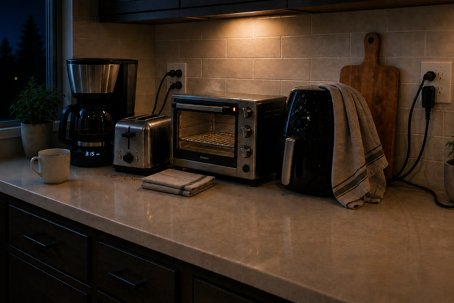
Take a close look at the kitchen above.
It's 3:15 a.m. The house appears to be asleep, but one countertop appliance is still on. A faint wisp of smoke drifts from the toaster oven as a few forgotten crumbs begin to burn.
Did you notice the other potential safety hazards?
Many homeowners overlook everyday risks because they seem harmless. Fortunately, a few simple habits can help reduce the risk of fire, water damage, and higher energy bills.
At Single Source Disaster Recovery Specialists, we help homeowners and businesses recover from fire, smoke, water, and mold damage throughout Rhode Island. While not every emergency can be prevented, many begin with small maintenance issues that are easy to correct.
Let's take a closer look.
Never Leave Heating Appliances Running Unattended
The first clue in the photo is the toaster oven.
The power light is on, the heating elements are still warm, and a few crumbs have started to smoke. While this doesn't mean a fire is about to occur, it illustrates an important safety reminder.
Most appliance fires happen while an appliance is operating or shortly after it's been used, especially when crumbs, grease, or other combustible materials are present.
Always turn off heating appliances after use and never leave them running when you leave the room or go to bed.
Which Appliances Should You Unplug When They're Not in Use?
Turning an appliance off isn't the same as unplugging it.
Many countertop appliances continue to receive electricity even when they're switched off. Unplugging removes the power source completely, helping reduce the risk of electrical faults, accidental activation, damage from power surges, and unnecessary standby electricity use.
Small Appliances to Unplug When Not in Use
- Toasters
- Toaster ovens
- Coffee makers
- Air fryers
- Slow cookers after cooking is complete
Large appliances such as refrigerators and freezers are designed to remain plugged in continuously.
Keep Towels Away From Heat
Did you notice the towels?
The folded towel sits close to the toaster oven, while another hangs over the air fryer.
Neither towel is touching a heating surface, but towels, oven mitts, paper products, and other combustible materials should always be kept well away from appliances while they're operating. A little extra clearance can help prevent an accidental fire.
Don't Ignore the Crumbs
The crumbs beneath the toaster may not seem like much, but they tell an important story.
Over time, crumbs collect inside both toasters and toaster ovens. When heating elements become hot, those crumbs can begin to smolder or ignite.
Regularly empty crumb trays and wipe away loose crumbs from your countertop. It's one of the easiest ways to reduce the risk of a kitchen fire.
Check Cords and Outlets Regularly
Electrical cords and outlets deserve a quick inspection every so often.
Replace Any Appliance If You Notice:
- Frayed or cracked cords
- Loose plugs
- Burn marks
- Exposed wiring
- Discolored or warm outlets
If something doesn't look right, unplug the appliance and have it repaired or replaced before using it again.
Fire Isn't the Only Risk
Kitchen appliances can also cause water damage.
Coffee makers, refrigerators with ice makers, dishwashers, washing machines, and water heaters can all develop slow leaks that go unnoticed until they damage floors, cabinets, drywall, or insulation.
Inspect water supply lines and connections periodically, and replace aging hoses before they fail. A simple maintenance check today can help prevent a costly insurance claim tomorrow.
A Few Minutes of Prevention Can Save Thousands
Protecting your home doesn't require expensive equipment. It starts with a few simple habits.
Simple Appliance Safety Tips
- Turn off heating appliances when you're finished using them.
- Unplug small appliances when they're not in use.
- Keep towels, paper products, and other combustible materials away from heat sources.
- Clean crumbs, grease, and dust regularly.
- Inspect cords, plugs, and outlets for signs of wear.
- Check appliance water lines for leaks.
- Never leave cooking appliances operating unattended.
When Property Damage Happens, Fast Action Matters
Even the most careful homeowners can experience an unexpected appliance failure, electrical malfunction, or water leak.
If your home or business suffers fire, smoke, water, or mold damage, fast action can help minimize damage and reduce restoration costs.
Single Source Disaster Recovery Specialists provides 24/7 emergency response, professional fire and smoke cleanup, water damage restoration, structural drying, mold remediation, and reconstruction services throughout Rhode Island. With more than 55 years of experience and Occupancy-Aware Mitigation™, Single Source helps homeowners and businesses restore their properties quickly, safely, and with as little disruption as possible.
One final SEO recommendation: I'd bold the phrases "3:15 a.m.", "toaster oven", "fire damage", "water damage", "Rhode Island", and "Occupancy-Aware Mitigation™" within the body where they naturally occur. A little strategic emphasis can improve readability and help readers quickly scan the article without overdoing it.