
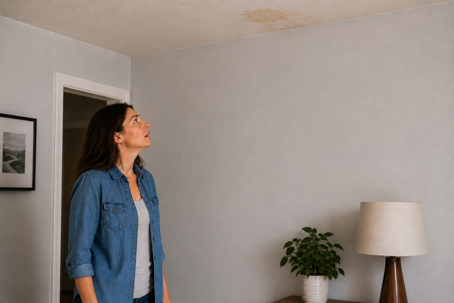
Is Your Air Conditioner Causing Water Damage? Warning Signs to Watch For.
Your air conditioner doesn't just cool your home. It also removes moisture from the air, and all that water has to go somewhere.
In a central AC system, condensation normally collects in a drain pan beneath the indoor air handler and exits through a condensate drain line. But a clogged drain, cracked pan, frozen coil, damaged line, or other problem can send water into your attic, basement, ceilings, walls, or floors instead.
Window air conditioners can cause water damage, too.
During our many years providing water damage restoration services to Rhode Island homeowners and businesses, Single Source Disaster Recovery Specialists has seen the damage even a small AC leak can cause. Water can spread into ceilings, walls, insulation, and flooring before a homeowner realizes there's a problem.
Knowing the warning signs can help prevent a minor AC issue from becoming extensive water damage.
What Are the Warning Signs of an AC Leak?
Common warning signs include water around the air handler, musty odors, ice on the unit or refrigerant lines, weak airflow, increased humidity, and water stains on ceilings, walls, or floors.
Watch for:
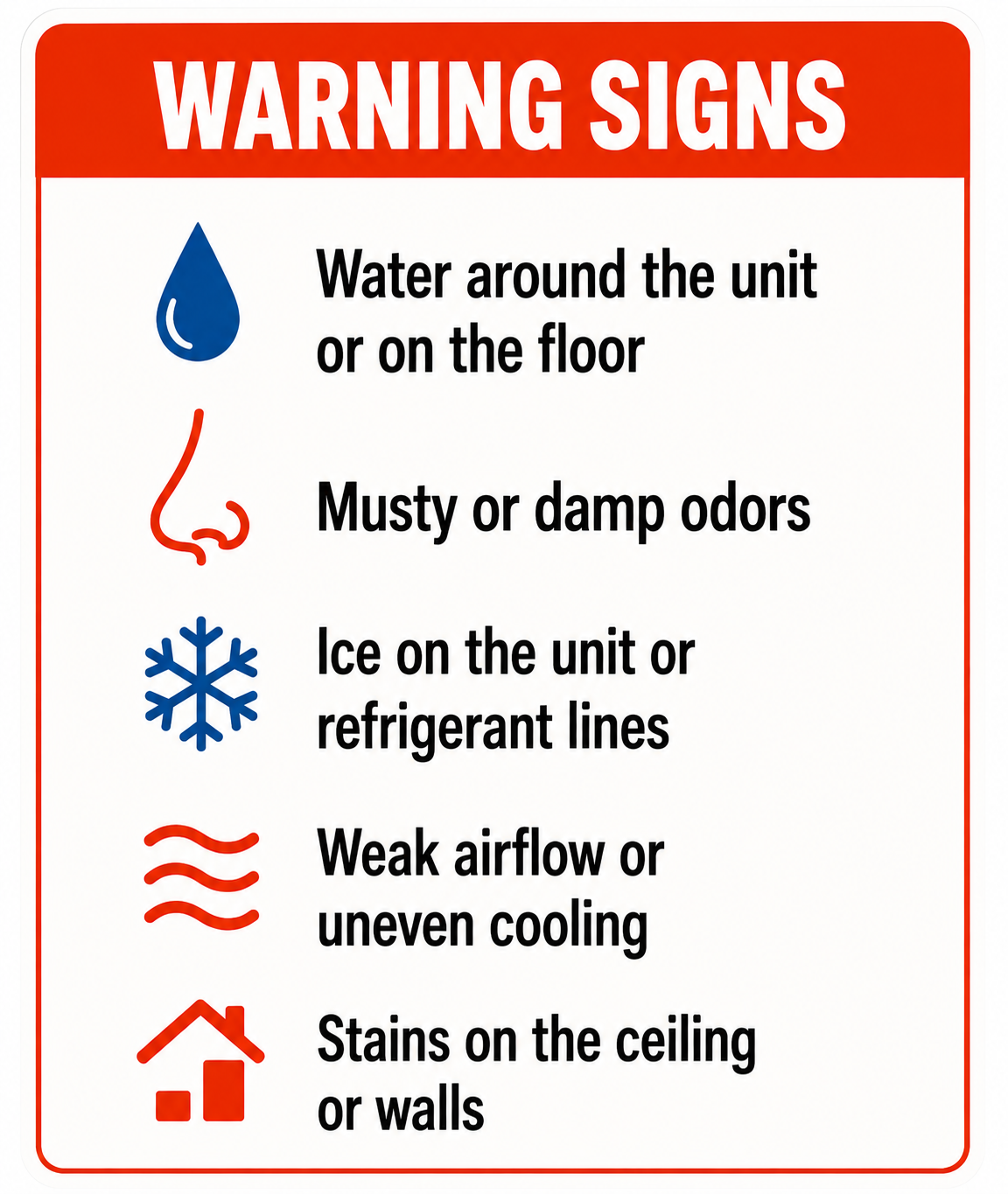
If you notice these symptoms, have the system inspected by a qualified HVAC professional. If water has already damaged your home, a water damage restoration professional can determine how far the moisture has spread and whether structural drying is needed.
Why Can an Attic AC Leak Cause So Much Damage?
An attic air handler can cause extensive water damage because a leak may remain hidden above your living space.
Water from an overflowing condensate pan or damaged drain line can soak insulation and travel along framing before reaching the ceiling below. By the time you notice a yellow or brown stain, bubbling paint, musty odor, or sagging drywall, moisture may have affected a much larger area.
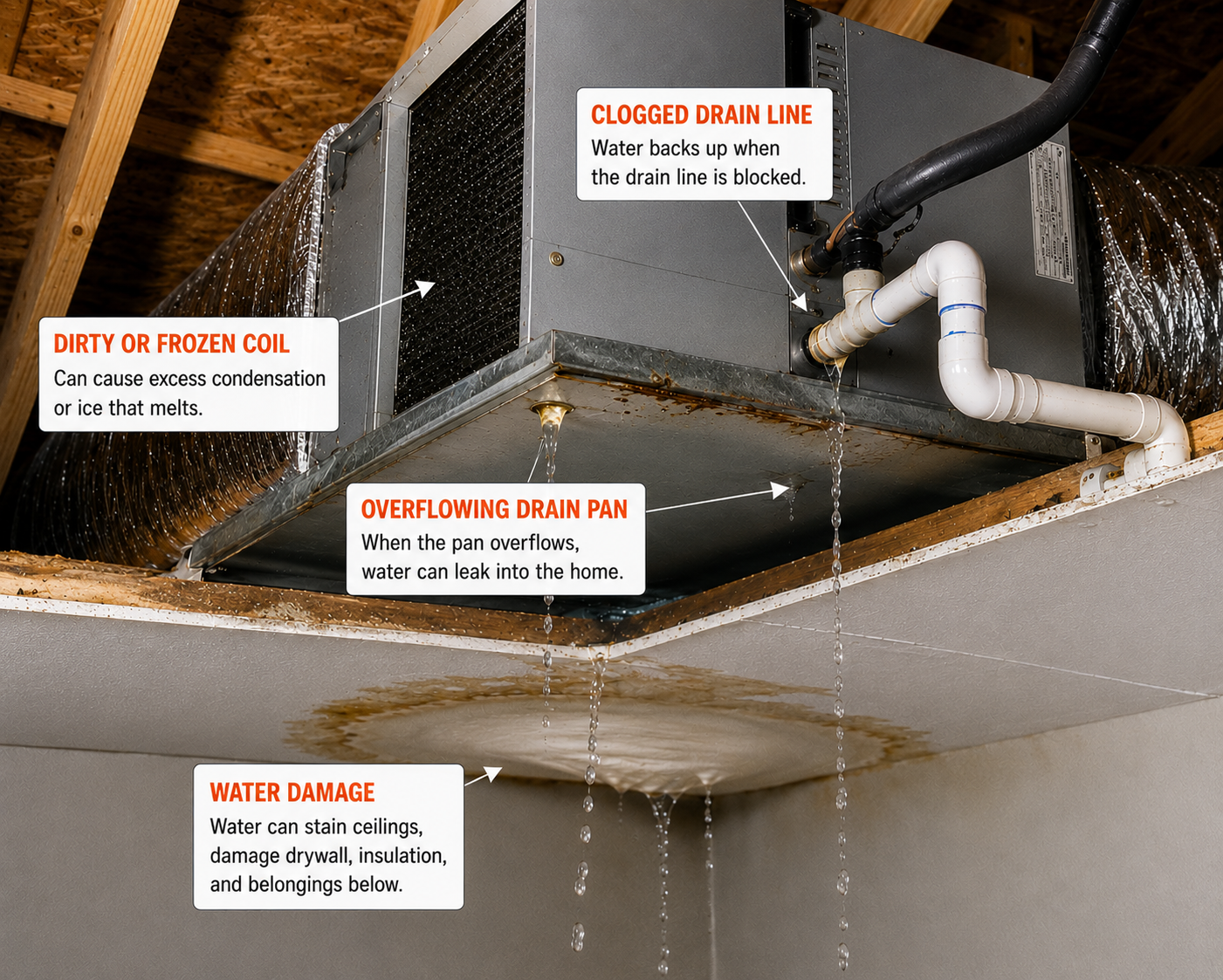
Don't assume the leak is directly above the stain. Water can travel before becoming visible, which is why professional moisture detection may be needed to determine how far it has spread.
If a ceiling is bulging or sagging, keep people and belongings away from the area. Use additional caution if water is near light fixtures or electrical components.
What Happens When an AC Leaks in a Finished Basement?
An AC leak in a finished basement can damage flooring, drywall, baseboards, and insulation even when only a small amount of water is visible.
Water can travel beneath carpet, laminate, engineered wood, or vinyl flooring and wick into drywall and baseboards. Warning signs include damp or discolored flooring, swollen baseboards, staining along walls, buckling flooring, and musty odors.
Simply wiping up the visible water may not solve the problem. In Rhode Island homes with finished basements, moisture can remain trapped beneath flooring or behind walls where it isn't easily seen.
Can a Window Air Conditioner Cause Water Damage?
Yes. A window air conditioner can cause water damage if condensation drains indoors, drainage is blocked, the coil freezes, or the unit is improperly installed or sealed.
Window AC units are designed so condensation drains outdoors. When that doesn't happen, water can damage the window sill and frame, drywall, insulation, flooring, and belongings below.
Look for:
- Water or dampness around the window
- Peeling or bubbling paint
- Soft or swollen window trim
- Stains below the unit
- Musty odors or discoloration
- Water collecting on the floor
- Ice forming on the AC unit
Rainwater can also enter around a window unit that isn't properly installed and sealed. Don't assume moisture around a window AC is "just condensation." Find out where the water is coming from and why.
How Can You Help Prevent AC Water Damage?
Regular AC maintenance and periodic visual checks can help reduce the risk of water damage.
Have your central AC professionally maintained and ask that the condensate drain, drain pan, evaporator coil, and related components be inspected. If your air handler is in an attic or basement you don't visit regularly, check the area periodically during Rhode Island's cooling season.
A condensate float switch can shut down the system if water backs up, while a water leak sensor near the air handler can provide an early warning. Window units should also be checked periodically for moisture around the unit, window frame, wall, and floor.
Most importantly, don't ignore a small stain, puddle, musty smell, or change in the way your AC operates.
Will Homeowners Insurance Cover Water Damage From an AC Leak?
Homeowners insurance may cover some sudden and accidental water damage caused by an air conditioning system, but coverage depends on the cause and the terms of your individual policy.
Damage related to wear and tear, deterioration, inadequate maintenance, or an ongoing leak may be treated differently. Mold coverage can also vary.
Your insurance carrier or agent is the appropriate resource for questions about coverage, deductibles, exclusions, and whether a loss should be submitted as a claim.
Single Source Disaster Recovery Specialists does not determine insurance coverage. When an insured loss requires professional restoration, Single Source can work with homeowners and their insurance professionals and provide documentation of the damage and restoration work performed.
Can an AC Leak Cause Mold?
Yes. An AC leak can create conditions favorable for mold growth when moisture remains in drywall, insulation, flooring, wood, or other building materials.
Correcting the AC problem is the first step. Wet building materials should also be identified and properly dried to help prevent additional damage and mold growth.
Who Should You Call If Your Air Conditioner Is Leaking Water?
If the problem is coming from the AC system itself, a qualified HVAC professional should diagnose and repair it.
If the leak has caused water damage to your home, a water damage restoration company, like Single Source, can detect hidden moisture, dry affected areas, and repair the resulting damage. In some situations, you may need both professionals.
The Water You See May Not Be All the Water That's There
Water from an AC leak can travel beneath flooring, soak into drywall and insulation, and move through ceiling and wall cavities. The stain or puddle you see may be only part of the problem.
Single Source Disaster Recovery Specialists provides professional water damage cleanup and restoration throughout Rhode Island. Services may include moisture detection, water extraction, structural drying, removal of damaged materials, mold remediation when needed, and repairs.
With more than 55 years of property damage restoration experience, Single Source helps Rhode Island homeowners identify and properly dry affected areas rather than addressing only the water that is visible.
The sooner the source is found and affected materials are properly dried, the better the opportunity to keep a small AC leak from becoming a much bigger problem.